
Carbon footprinting
Measure to improve
Carbon footprinting is a customized diagnostic tool that identifies a farm’s GHG emission sources and quantifies those emissions. Farmers can use the insights to make the best decisions to improve yields and reduce the carbon footprint of their agricultural operations.
Benefits
Customized
Our representatives are familiar with each farm’s unique characteristics and often already have access to key data. So they’re well-positioned to recommend the most suitable steps and deliver a personalized action plan.
Practical and efficiency-driven
Our carbon footprinting comes with recommendations based on our goal to improve farm efficiency AND reduce GHG emissions. In other words, we help farmers do more and do it better.
Strategic
Carbon footprinting establishes a baseline and provides supporting evidence for the effectiveness of farmers’ reduction and sequestration efforts. It’s the first step toward securing long-term access to the carbon credit market.
Rewarding
Famers can be compensated for improving their carbon footprint by participating in a reduction project funded by a partner or processor, for instance. They can also monetize their GHG emissions reduction efforts by selling credits on the carbon market.
Support from start to finish
How it works
Collect data
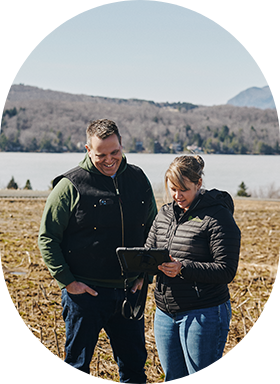
A team of representatives will gather available information and collect additional data with a few simple questions, if needed.

Calculate the footprint
We use a calculator designed for local farms to get a good overall picture of the farm’s GHG emissions and carbon sequestration.
Create an action plan
Based on each farm’s specific circumstances, we identify the areas where action would be most beneficial. We put a priority on actions that offer the greatest return and are easiest to implement.
Reduce the footprint
Our representatives help farmers take action. They follow up during routine visits to save time and maximize efficiency.

Jérôme Beaudoin
Ferme Éthier Pelland
Saint-Nazaire d’Acton, Montérégie, Québec
Growing expectations
Consumer expectations are rising, and environmental regulations are tightening. This puts pressure on the entire agriculture industry. Therefore, farmers must review some of their practices to align with new expectations.